


CIVIVI Appalachian Drifter Yellow G10 / Rose Pattern Carbon Fiber knife, Black Damascus (C2015DS-3)
- Appalachian Drifter Yellow G10 / Rose Carbon Fiber, Black Damascus EDC knife made with exclusive materials at an attractive price point. Manufactured by CIVIVI Knife, a brand of WE Knife that produces the highest quality knives in the world!
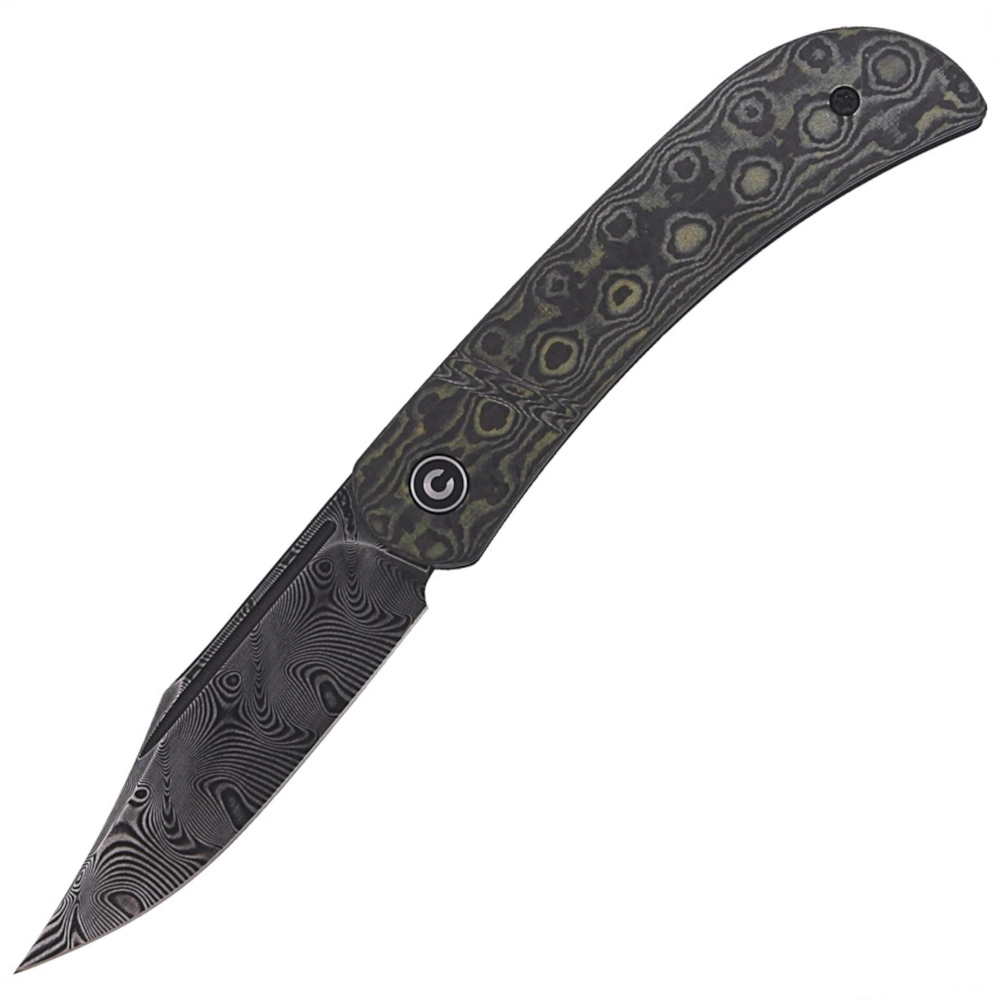
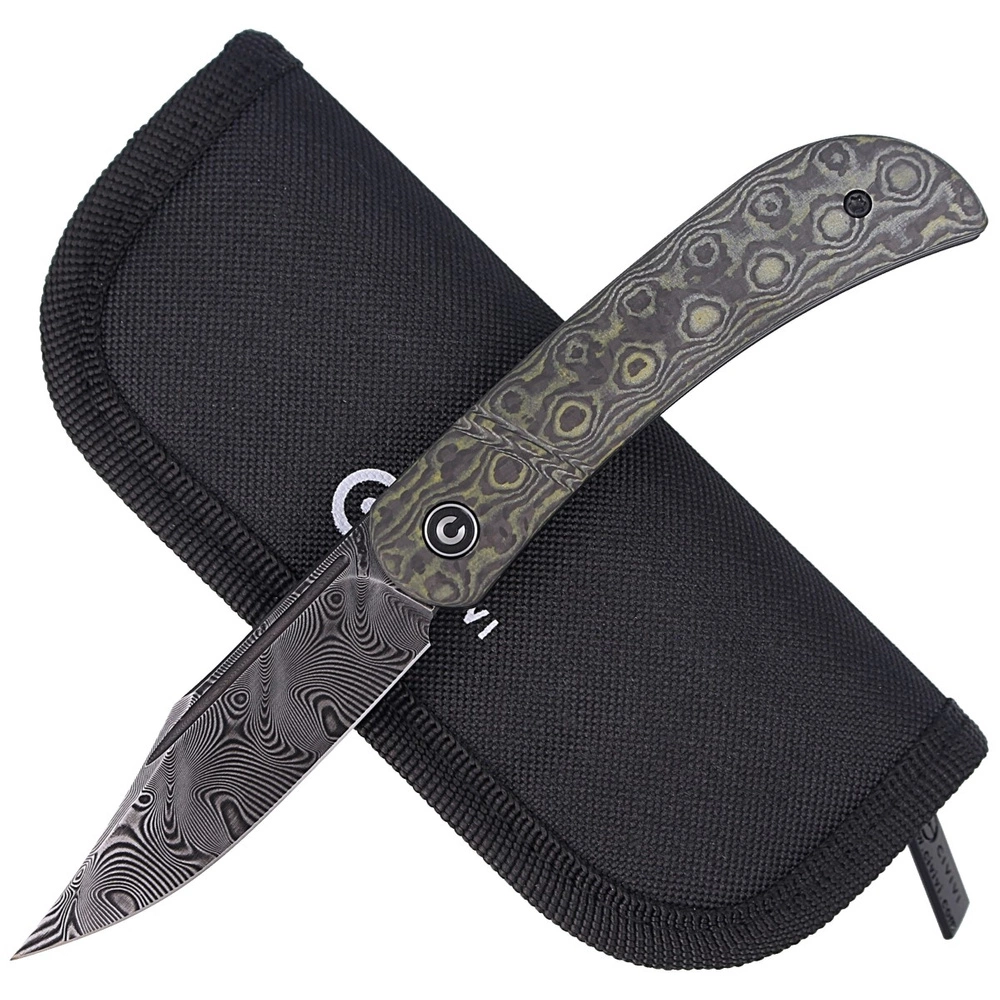
Appalachian Drifter Yellow G10 / Rose Pattern Carbon Fiber, Black Damascus
artful, lightweight folder for everyday carry with two blade opening systems. Made of exclusive materials while maintaining attractive prices.
Civivi - sub-brand WE Knife, a company that produces knives of the highest global quality. Production takes place on the same production lines as the EC, so that the highest standard of installation is maintained.
Black Damascus - stainless, blackened steel damascus o unique design. Finished with Black Hand Rubbed made of black hand rubbed damast. A blade consisting of two different types of steel, forged and put together in different ways getting this amazing pattern. It is characterized by high hardness in the range of 58-60 HRC.
Double Detent Slip-Joint - "no lock" non-locking mechanism used in folders in which the blade is held in the open position by spring pressure on the flat section at the back of the blade shank during use. Slip Joint holds the wedge in both the folded and unfolded positions. When folding, it generates smooth resistance as in a knife equipped with a traditional locking mechanism. To avoid accidental opening during handling, the blade is held in the closed position by two steel balls Double Detent, one on each side of the blade.
Head - type clip point, made of damast with a beautiful and unique design. The generous belly extends the length of the cutting edge relative to the length of the blade converging toward the needle-sharp tip of the knife. High concave cut (Hollow Grind) provides powerful slicing performance, while the aggressively hollowed-out clip point suitable for piercing and precision work. Ceramic ball bearings support the smooth operation of the opening mechanism of the wedge, which can be opened in two ways, with a milled recess in the wedge or flipper front. The whole thing is interlocked by a Double Detent Slip Joint, thanks to which, in many countries, our Appalachian will be completely legal.
Handle - facings made of layers of yellow G10 and carbon fiber Rose Pattern Carbon Fiber. The interlacing of layers resulted in an unusual pattern that looks amazing and provides enough grip. The whole thing was attached to black liners made of stainless steel. In practice, this means many years of work without weakening the structure. Backspacer made of the same material as the covers. Axis pivot with stylized brand logo Civivi. Single-position, right-wing deep clip deep carry allows you to carry the knife discreetly in your pocket in the tipp (blade tip up). Above the clip in the backspacer cavity lanyard hole, cable hole.
Case - included for safe storage and transportation of the folder, zippered soft nylon case z logo brands Civivi.
Technical data:
Product number: C 2015DS-3
Product name: Appalachian Drifter Yellow G10 / Rose Carbon Fiber
Overall length: 172.7 mm / 6.8"
Blade length: 75.2 mm / 2.96"
Handle length: 97.5 mm / 3.84"
Blade thickness: 2.5 mm / 0.10"
Handle thickness: 12.5 mm / 0.49"
Weight: 73.9 g / 2.61 oz
Blade material: Damascus
Blade hardness: 58-60 HRC
Blade grind: Hollow
Blade finish: Black Hand Rubbed
Handle Material: Layered G10 and Rose Pattern Carbon Fiber
Handle finish color: Yellow / Black
Backspacer Material: Layered G10 and Carbon Fiber
Backspacer color: Yellow / Black
Clip: Right, Tip-Up
Clip material: Stainless Steel
Pivot mechanism: Caged Ceramic Ball Bearing
Lock: Double Detent Slip Joint
Designer: CIVIVI
Brand name: Civivi Knife
Manufacturer: WE Knife
Sharpening and maintenance. Don't make the tool too dull. Sharpen your knife on dedicated whetstones and sharpeners. Your tool should be cleaned, dried and oiled regularly. Especially after use in humid environments.
Be careful when using, the tool has sharp edges, risk of injury. Remember to keep the blade pointed outward from the body and away from bystanders. Use with protective gloves, store in a safe place. Keep away from children. Dispose of used product according to local regulations.