


Böker Solingen - Tiger-Damascus knife

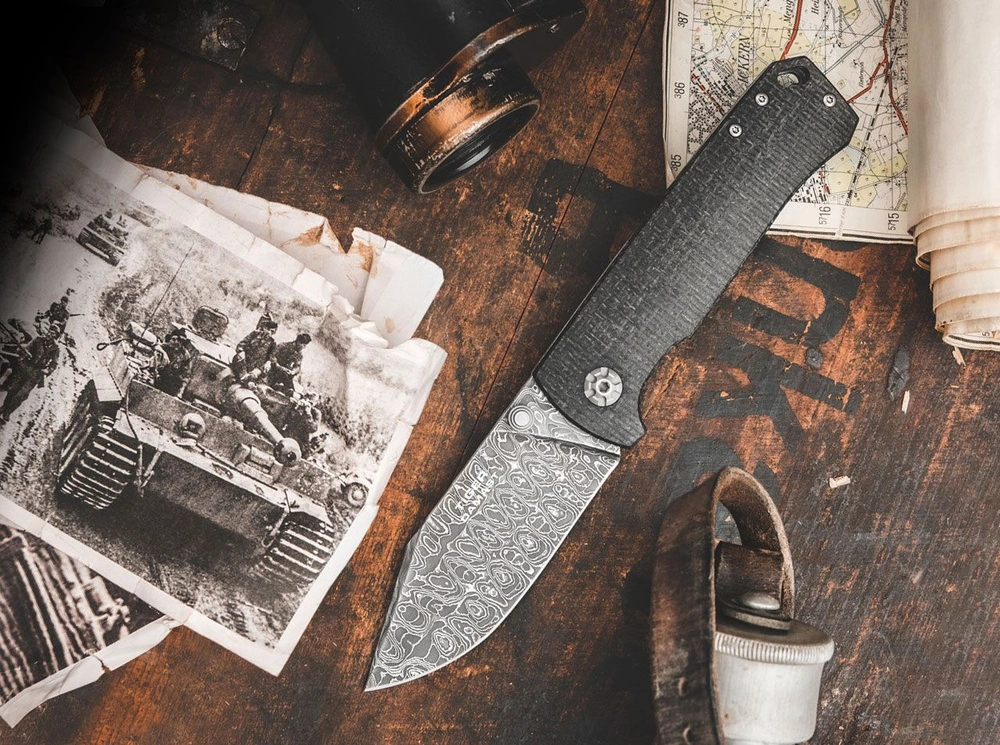
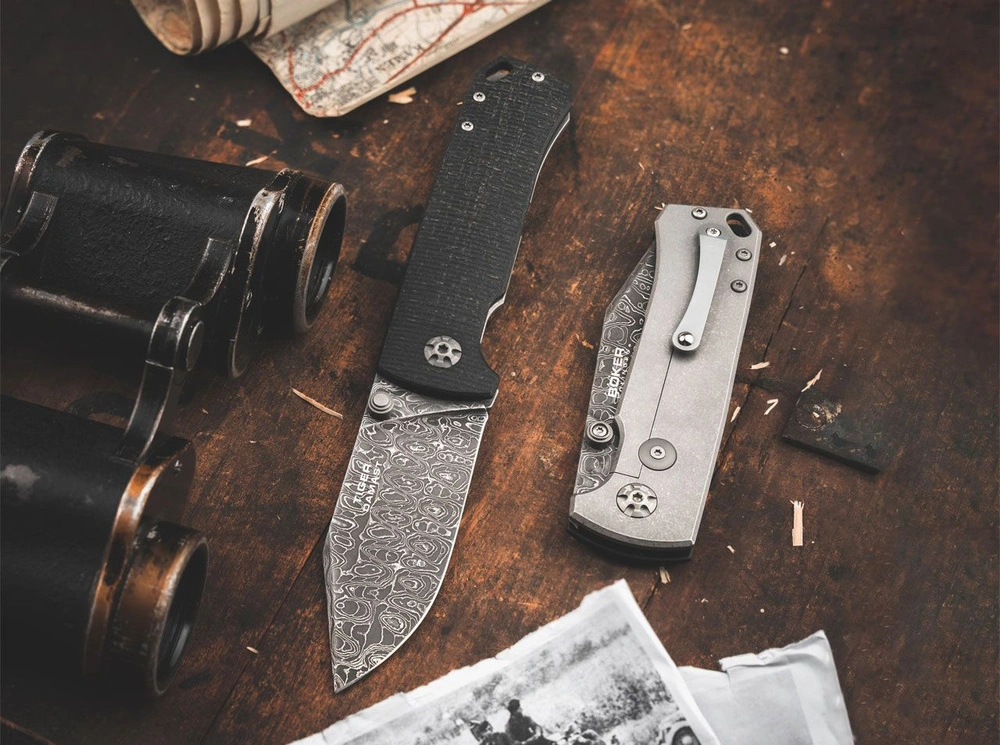
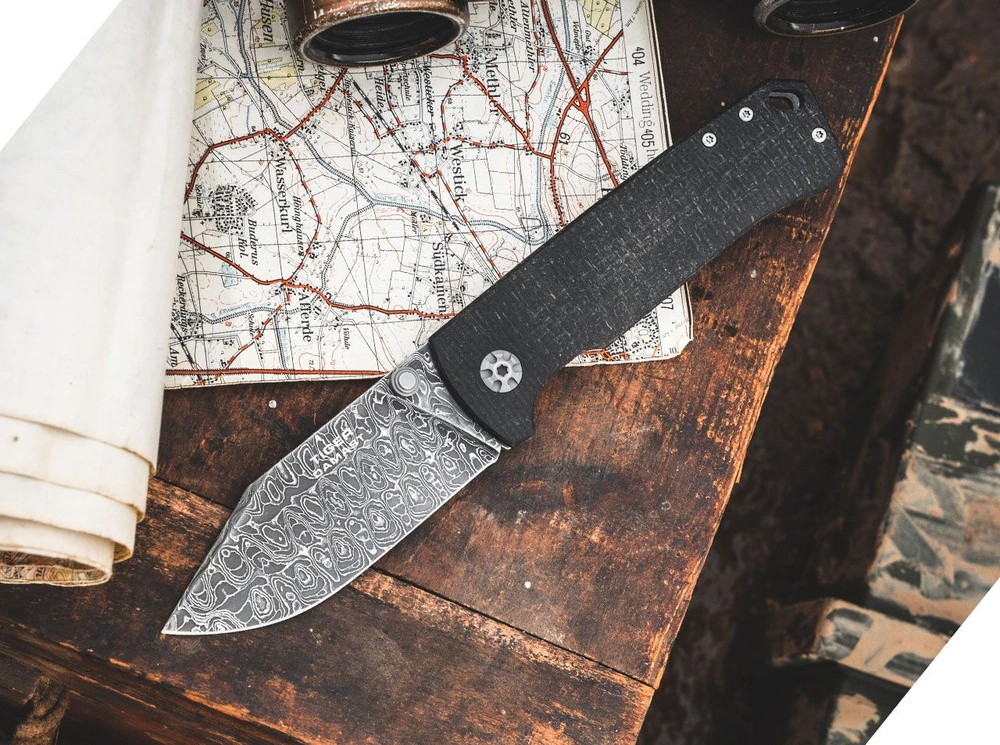
The impressive Boker Tiger-Damascus adds a unique model to our series of pocketknives steeped in history. A collector's knife with a historical past is a real piece of living history and combines high-quality workmanship with authentic materials. Known around the world as the Tiger, the Panzerkampfwagen VI was used by the Wehrmacht in the late summer of 1942. It is considered one of the most famous tanks in history, despite the modest number produced of only 1,350 units and the resulting low strategic significance. The development of the heavy tank dates back to 1937, and serial production began in August 1942. Today, only seven copies have survived and are on display around the world. Due to low availability, the so-called Frankentiger was even assembled for this purpose from wrecks from different years of production.
The tank parts we are using are from a Tiger I tank from Schwere Panzerabteilung 502, which was destroyed in combat in Latvia in the summer of 1944 in a densely wooded area near the village of Bauska. Based on the remains found at the original excavation site, it was determined that this Tiger was an early-to-mid production model. Examination of battle damage debris, military records and local historical accounts showed that this Tiger tank collided with both a Russian T-34 medium tank and an SU-76 anti-tank gun, and was also damaged by a stationary 45mm anti-tank gun. -tank gun. It is still unclear which of the strikes caused the most damage and sealed the Tiger's fate. However, since several pieces of 76mm cal. shrapnel were lodged in the heavy armor, it is assumed that a nearby T-34 inflicted decisive hits before also being destroyed 300 meters away.
Otto Carius and Albert Kerscher, two of the most successful tank commanders of World War II, attempted at the time to stop the advance of Soviet forces on Riga with the Schwere Panzerabteilung 502. The division was able to so devastatingly defeat the enemy blocking force near Tukums that it was able to retreat to Latvian Kurland with more than 500,000 other Heeresgruppe Nord soldiers. There the troops were surrounded in the further course of the Soviet advance. Kurland cauldron served as a bridgehead and could be supplied by the Kriegsmarine by sea. It withstood six major attacks by Soviet forces until its unconditional surrender on May 8, 1945.
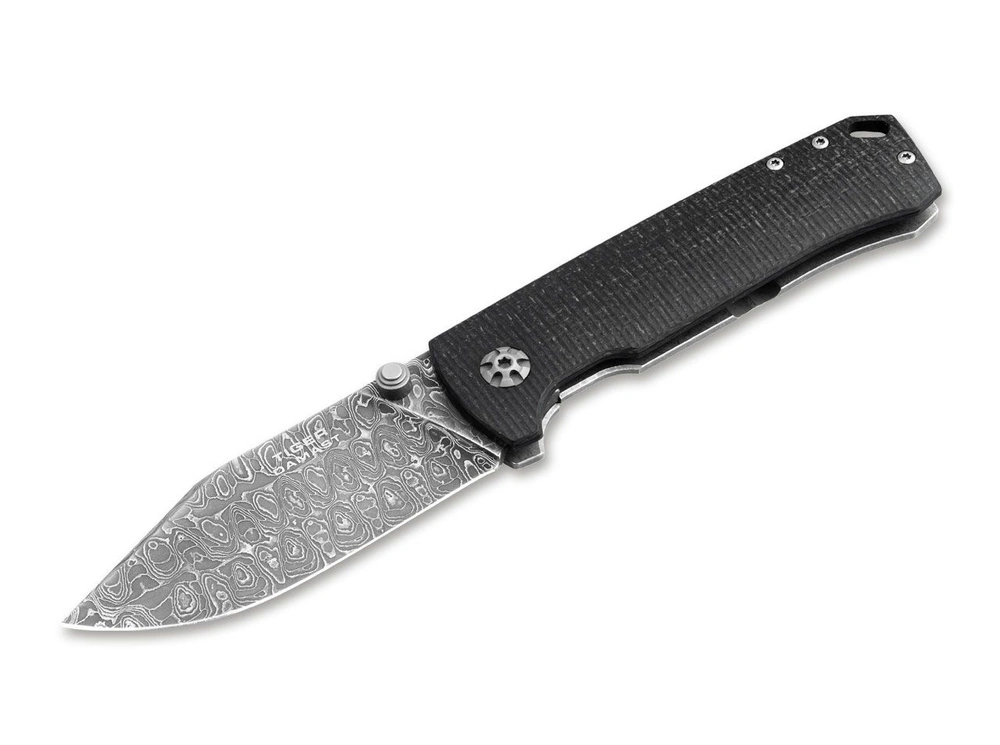
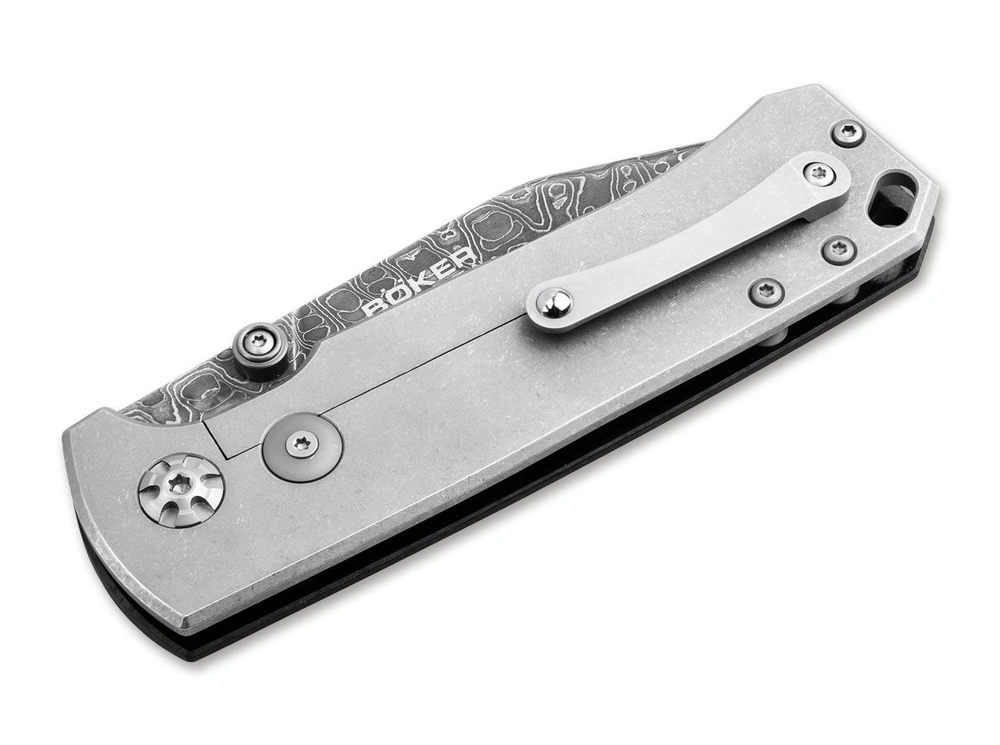
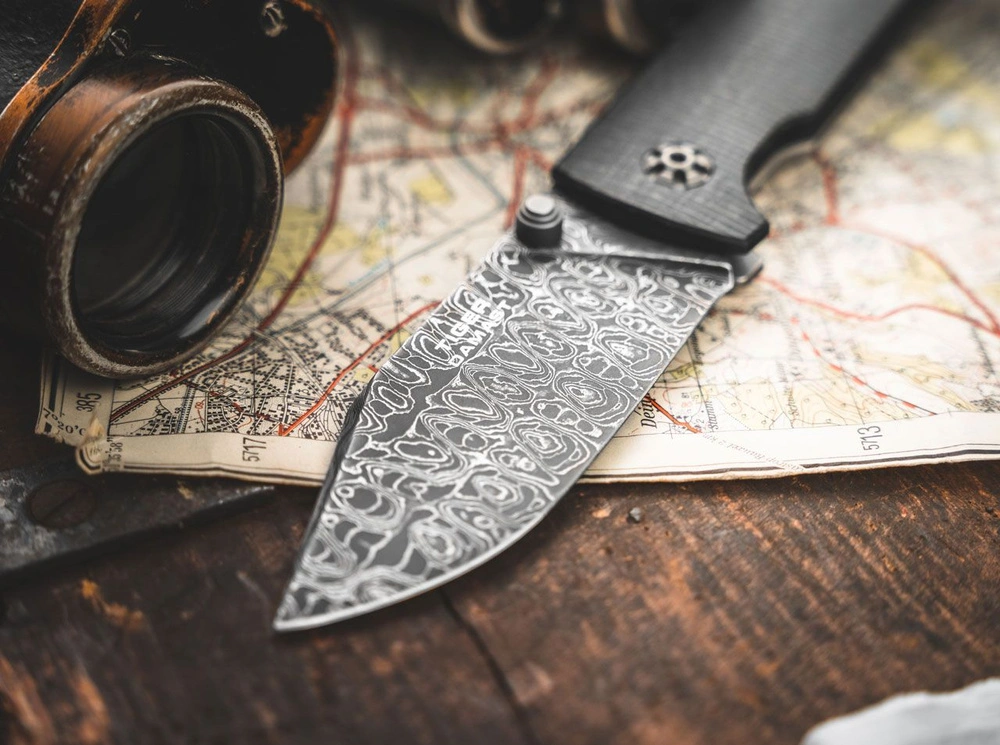
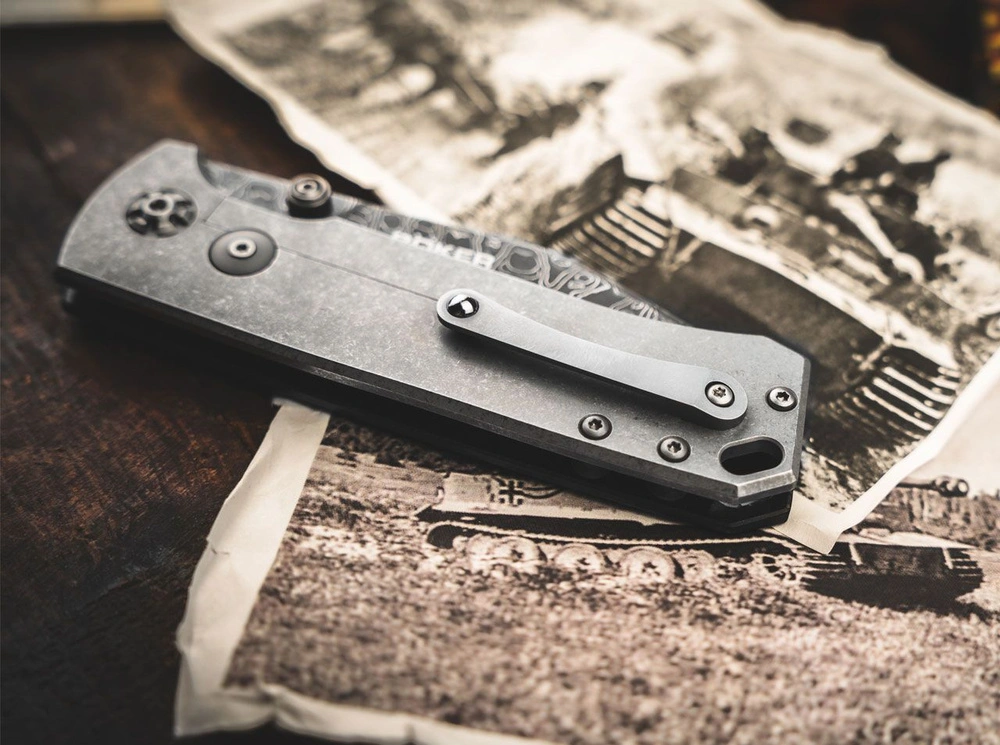
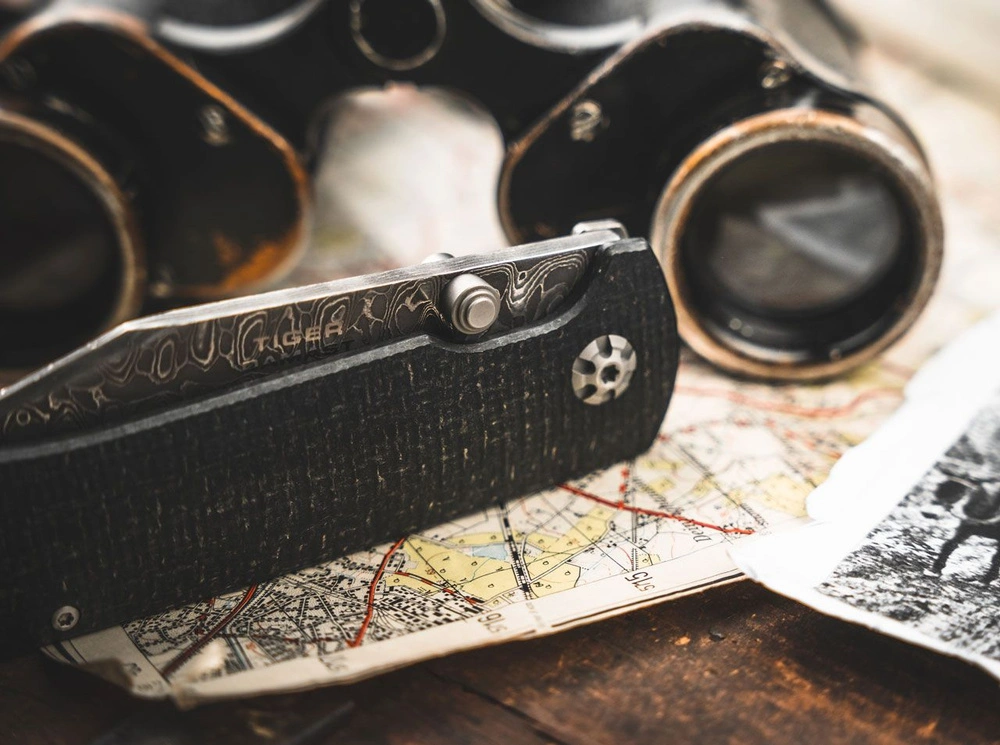
The straight-edged Boker Tiger-Damask features a unique Damascus blade made from the steel of a battle tank destroyed in Bauska. The non-steel mosaic damask is hand-forged for us by Chad Nichols in the Fearless pattern and resembles the tank tracks left in the ground by Tiger's heavy tracks. Unlike traditional damascus, the production of damascus mosaic does not create layers, but the complex damascus bars are hand-formed into a mosaic in an intricate and highly complicated process. The ball-bearing blade is opened with a thumb stud and locked by a sturdy steel frame with a stonewash finish, while the Hinderer lock acts as a safety device to prevent over-extension of the lock. The overall shape of the knife follows the famous lines of the tank, and the decorative revolving bolt is modeled after the main drive wheel. Slightly contoured handle scales made of jute micarta have precisely milled grooves that recall the characteristic surface texture of the Zimmerit coating of German armored vehicles. With lanyard hole and milled clip (up/back) with steel ball. Handmade in the Boker Knife Manufacture in Solingen. Comes with elegant overhead display, certificate of authenticity and individual serial number.
| Wedge steel: | Damascus |
| Manufacturer: | Boker |
| Overall length (mm): | 200 mm |
| Wedge length (mm): | 85 mm |
| Thickness of the wedge: | 4.0 mm |
| Weight: | 139 g |
| Blocking: | Framelock |
| Handle: | micarta |
| Vagina: | Not |
| Clip: | yes |
List of knife safety warnings based on requirements
Regulation (EU) 2023/988 on general product safety
(GPSR):
* Risk of injury: Use the knife carefully and always hold it by the handle. The blade is
very sharp and can cause serious cuts. Don't try to catch a falling
knife.
* Safe storage: the knife should be stored in a safe
place, out of reach of children and unauthorized persons. Use a blade guard if
is available.
* Use as intended: Do not use the knife for purposes for which it is not
intended, for example, for opening cans or loosening screws. This can lead to
knife damage or injury.
* Caution when cleaning: Use caution when cleaning the knife,
to avoid cuts. Do not use aggressive cleaning agents that can
damage the blade.
* Blade maintenance: Sharpen the blades regularly to keep them in good condition. Blunt
knives are more dangerous than sharp ones because they require more force, which
increases the risk of slipping.
* Transporting the knife: When transporting the knife, make sure the blade is secured,
for example, by using a vagina or sheath. This prevents accidental injuries.
* Keep your knife clean: Clean the knife regularly to remove any food debris
or other contaminants. This ensures safe and hygienic use.
* Do not modify the knife: Do not try to modify the knife or repair it yourself,
if you don't have the right skills. This can lead to damage to the knife
or injuries.
* Warning for children: knives are intended for adults only. Do not allow
children to use knives without supervision.
* Disposal: Dispose of used or damaged knives in a safe manner to
prevent accidental cuts.
This product is for adults only, who have knowledge and experience in handling sharp cutting tools. Improper use of the knife can lead to serious injury. The blade of the knife is very sharp and can quickly cut through skin and tissues; so always be very careful when slicing and do not bring your hand close to the cutting edge. To avoid slipping of the knife, it is recommended to cut on a stable and non-slip surface and avoid excessive pressure, which can cause uncontrolled movement of the blade.
Be aware that leaving a knife on the edge of a table, countertop or in easy-to-reach places, especially for children, is a danger. The knife should always be properly secured after finishing work, preferably by putting it down on a stable surface or storing it in specially designed blocks, sheaths or on magnetic strips. Never use a knife for tasks for which it is not intended, such as opening cans or using it as a lever, as this risks both damage to the tool and dangerous accidents.
Blunt blades pose an increased risk of injury because they require more force and tend to slip off the material being cut. Therefore, care should be taken to sharpen the knife regularly to maintain optimal sharpness. It is also necessary to clean and dry the tool regularly to prevent corrosion and bacterial growth. It is recommended to periodically inspect the condition of the handle and blade to detect any cracks, chipping or loosening. If damage is found, the knife should be immediately repaired or replaced with a new copy.
When using the knife, focus solely on the task at hand, avoid talking on the phone or watching TV while slicing, and make sure your work area is well-lit. You are reminded that in some countries or regions there are laws restricting the possession and carrying of knives. Before buying or using a knife, it's a good idea to make sure that using it in your location is allowed under the current law.
Adherence to the above rules will enable safe and efficient use of the knife, minimizing the risk of accidents and ensuring the long life of the tool.